StingRay Hydrofoil Stabilizer Breakdown: Motor Fit and Performance
As Amazon Associates, we earn from qualifying purchases. This means we may receive a small commission at no extra cost to you if you click through and make a purchase.
A stingray hydrofoil stabilizer solves the core hydrodynamics challenges common to outboard and stern-drive vessels: sluggish hole shot performance, stern squatting, porpoising across open chop, and high-speed chinewalking. By redirecting the downward thrust of the propeller wash into hydrodynamic lift right at the lower unit, a stabilizer wing pushes the stern up and drops the bow down. This action forces the hull onto plane at noticeably lower engine revolutions, maintaining forward visibility and reducing motor strain. Choosing the best stingray hydrofoil stabilizer for your setup hinges on three critical variables: the operational horsepower of your motor, your hull weight profile, and whether you prefer an engineered clamp-on installation or a permanently through-bolted cavitation plate mount.
This technical breakdown evaluates 5 StingRay stabilizer models designed for motors ranging from 4 horsepower outboards up to 350 horsepower commercial powerheads. While every model in this lineup shares the core hydrodynamic profile engineered to suppress cavitation and ventilation, they diverge significantly in hardware architecture, overall mass, dimensional width, and mounting protocols. Understanding these engineering differences ensures your motor gains immediate low-speed lift without introducing unwanted steering torque or excess drag at top speed.
Which StingRay Hydrofoil Stabilizers Should You Buy
- Classic Senior 2 Hydrofoils for 40-300: Best for owners of mid-to-large freshwater runabouts who want an authentic, full-width single-piece foil with a dedicated drill-through engine mount.
- Starfire Hydrofoils for 40-300 hp Boats: Ideal for operators who require high top-end speed and demand a no-drill hydrofoil stabilizer secured via precision set screws.
- XR4 Senior Hydrofoils for 40-300 hp: Best for heavy watersports towboats, loaded center consoles, and pontoon hulls needing aggressive stern lift to yank skiers out of the water.
- Classic Junior 2 Hydrofoils for 9.9-40: Best for lightweight jon boats, small tenders, and inflatable watercraft driven by portable sub-40 horsepower outboards.
- STINGRAY HYDROFOILS StingRay AIRO-1 AIRO Hydrofoil: Ideal for boaters needing an ultra-lightweight, two-piece split stabilizer design capable of mounting across an ultra-broad 4 to 350 horsepower range.
Classic Senior 2 Hydrofoils for 40-300
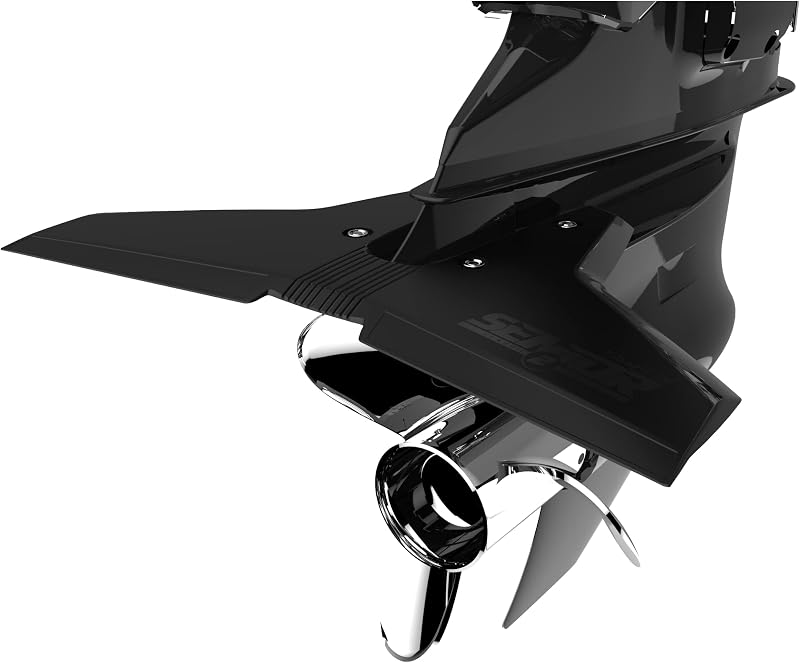
Stingray Hydrofoils
9.2/10 Our score
- Color
- Black
- Size
- Standard
- Dimensions
- 23.5 x 18.125 x 1.75 inches
- Weight
- 3.25 pounds
Listed by the seller on the product page.
Best for: Mid to large freshwater runabouts
Pros
- Broad 40 to 300 hp fitment
- Drag-reducing wing texture
- Durable single-piece construction
Cons
- Requires cavitation plate drilling
The Classic Senior 2 Hydrofoils for 40-300 represents the established standard in single-piece stabilizer architecture for marine craft. Sized for outboard and outdrive motors rated between 40 and 300 horsepower, this model focuses on maximizing stern lift via an expansive surface area measuring 23.5 inches deep by 18.13 inches wide. Crafted from metal or durable molded plastic, the foil features an integrated drag-reducing wing texture designed to channel turbulent wash cleanly past the trailing edge, helping heavy hulls blast out of the hole while sustaining an on-plane attitude at reduced throttle positions.
Installation follows the traditional drill-through method: the single piece slides directly over the engine cavitation plate, allowing the installer to drill mounting holes directly through the plate using the pre-drilled guides on the foil. This creates a rigid mechanical bond suited for harsh operating environments where hydrodynamic drag forces are substantial. The listing recommends this unit primarily for fresh water use on gasoline-powered 4-stroke engines, providing reliable bow leveling when hauling wakeboarders, tubers, or heavy deck loads.
- Engineered single-piece construction sized for 40 to 300 horsepower engines
- Drag-reducing textured wing surface maintains cruising speed and top-end efficiency
- Substantial 23.5-inch by 18.13-inch lift footprint weighing 3.3 pounds
- Slide-on engine mount configuration with dedicated drill alignment points
Where the classic senior 2 hydrofoils excel is sheer surface stability on standard runabouts, but it gives way to the Starfire model if you refuse to drill holes through your engine lower unit casting.
Starfire Hydrofoils for 40-300 hp Boats

Stingray Hydrofoils
9.8/10 Our score
- Color
- Black
- Dimensions
- 21.5 x 2 x 20 Inches
- Weight
- 2.75 pounds
Listed by the seller on the product page.
Best for: Boaters wanting clamp-on no-drill installation
Pros
- Zero-drill set screw mounting
- Lightweight aluminum construction
- Low-drag 1-inch profile
Cons
- Broad 20-inch footprint
For boaters determined to preserve their factory lower unit casting, the Starfire Hydrofoils for 40-300 hp Boats provides a specialized no-drill hydrofoil stabilizer solution. Engineered from rugged black aluminum, this model utilizes integrated heavy-duty set screws that clamp directly against the cavitation plate without requiring a single drilled hole. At 2.8 pounds and measuring 20 inches wide by 20 inches deep with a low 1-inch profile, the Starfire minimizes hydrodynamic resistance, making it a favorite for operators who prioritize top-end speed alongside swift planning performance.
The starfire hydrofoils profile is designed to sparkle in the sunlight while functioning as a high-efficiency planing aid. The hydrodynamic geometry generates exceptional lift per square inch, reducing low-speed ventilation, chinewalking, and hull porpoising. While it was built to offer easy clamp-on mounting, the casting also accommodates an optional two-drill installation if the operator ever decides to convert to a mechanically pinned mount for extreme applications.
- Patented no-drill set screw installation locks securely to the cavitation plate
- Lightweight aluminum construction weighing 2.8 pounds
- 20-inch square hydrodynamic profile maximizes lift without sacrificing top speed
- Optional secondary two-drill mounting pathway included in the casting
This stabilizer serves owners of performance hulls and inflatable boats who desire quick acceleration without structural modification. It yields to the heavier XR4 model when raw towing thrust and extreme wake suppression take priority over low-profile speed.
XR4 Senior Hydrofoils for 40-300 hp

Stingray Hydrofoils
9.8/10 Our score
- Color
- Black
- Size
- Standard
- Dimensions
- 24 x 5 x 22.25 inches
- Weight
- 5.2 pounds
Listed by the seller on the product page.
Best for: Heavy watersports and tow boats
Pros
- Maximum vertical stern lift
- Aids pontoon turning stability
- Smooths wake for towing
Cons
- Heaviest unit at 5.2 pounds
The XR4 Senior Hydrofoils for 40-300 hp is built for extreme lifting force, tailored specifically for heavy runabouts, ocean-going center consoles, pontoon boats, and intensive tow-sports rigs. Weighing in at 5.2 pounds and spanning dimensions of 24 inches deep by 22.25 inches high with a narrow 5-inch mounting base, this heavy-duty metal stabilizer provides the highest vertical lift coefficient in the lineup. It provides aggressive hull correction, forcing the bow downward instantaneously to clear forward visibility and smoothing out turbulent wake patterns behind the propeller.
The engineering profile of the xr4 senior hydrofoils allows pontoon boats to carve through tight turns without requiring the skipper to throttle down to prevent ventilation. Boaters running heavy tow operations frequently document high-speed runs using stabilized camera equipment, pairing a smooth hull ride with dji camera gimbals to maintain cinematic footage of tubers and skiers. The XR4 utilizes a dedicated 2-drill installation layout that bolts directly through the mounting flange, ensuring zero slippage under massive hydrodynamic drag.
- Heavy-duty metal construction weighing 5.2 pounds for maximum structural rigidity
- Engineered specifically for towing skiers, wakeboarders, and tubers
- Aids pontoon cornering performance by eliminating ventilation during hard turns
- Streamlined 2-drill mounting package includes all necessary marine-grade hardware
While the XR4 provides unmatched planing lift on heavy offshore or watersports craft, its large mass and drill requirement make it oversized for skiffs, where lightweight foils like the Junior are mandatory.
Classic Junior 2 Hydrofoils for 9.9-40

Stingray Hydrofoils
8.6/10 Our score
- Color
- Black
- Size
- Standard
- Dimensions
- 17.5 x 17 x 1.25 inches
- Weight
- 1 Pounds
Listed by the seller on the product page.
Best for: Small skiffs and portable tenders
Pros
- Calibrated for 9.9 to 40 hp
- Modifiable mid-section fitment
- Lightweight 16-ounce body
Cons
- Limited to sub-40 hp outboards
Targeted at lightweight skiffs, jon boats, and inflatable watercraft, the Classic Junior 2 Hydrofoils for 9.9-40 scales the proven engineering of the Classic line into a compact, 16-ounce package. Small hulls running sub-40 horsepower motors frequently suffer from severe stern squatting due to rear fuel and operator weight concentration. This metal hydrofoil forces the stern upward rapidly, allowing low-horsepower four-stroke engines to plane out effortlessly without bogging down the engine under heavy throttle loads.
A notable feature of the classic junior 2 hydrofoils design is its customizable mid-section, which can be modified or trimmed to ensure a flush fit against non-standard or cramped outboard lower units. The installation configuration utilizes a slide-on alignment mechanism where the operator drills through marked guides to achieve a permanent mechanical lock. By dampening porpoising and ventilation on lightweight hulls, the foil improves open-water safety, enhances helm sightlines, and delivers consistent fuel savings.
- Calibrated specifically for small outboards and outdrives rated 9.9 to 40 horsepower
- Ultra-lightweight 16-ounce metal build prevents lower-unit balance distortion
- Customizable mid-section allows material removal for specialized motor fitment
- Dampens chinewalking and cavitation across jon boats, tenders, and RIBs
The Classic Junior 2 is the premier choice for compact lower units under 40 horsepower, though it must not be mounted on larger outboards, where the AIRO-1 or Senior models are required.
STINGRAY HYDROFOILS StingRay AIRO-1 AIRO Hydrofoil

Stingray Hydrofoils
8.6/10 Our score
- Color
- Black
- Weight
- 1 Pounds
Listed by the seller on the product page.
Best for: Broad horsepower range with split-wing design
Pros
- Fits 4 to 350 hp engines
- Ultralight 1-pound profile
- Two-piece modular fitment
Cons
- Listing does not include set-screws
The STINGRAY HYDROFOILS StingRay AIRO-1 AIRO Hydrofoil introduces a versatile two-piece modular design engineered to fit outboards as tiny as 4 horsepower up to massive 350 horsepower engines. Weighing only 1 pound with compact exterior dimensions of 11.89 by 7.2 by 1.85 inches, the AIRO-1 takes its name from the Greek word meaning to raise or lift up. Its machined black exterior provides low-drag hydrodynamic efficiency while splitting into two independent wing components that flank the cavitation plate.
This independent split architecture allows the stingray airo-1 hydrofoil to adjust to virtually any cavitation plate width, bypassing the center-span clearance limitations that can complicate single-piece installations. Commercial operators and researchers testing marine telemetry often log engine load telemetry and high-frame performance metrics on western digital 8tb drives to verify fuel consumption drops after installing this split-wing setup. The listing does not specify set-screw hardware for this model, indicating a standard mechanical through-bolt attachment across both wing halves.
- Universal split 2-piece profile fits engine powerbands from 4 to 350 horsepower
- Extremely lightweight 1-pound footprint minimizes transom weight penalty
- Compact 11.89-inch by 7.2-inch machined construction for minimal top-end drag
- Engineered to eliminate hole shot lag, porpoising, and lower-unit cavitation
The AIRO-1 offers unparalleled versatility across mixed fleets and non-standard gearcases, though boaters demanding a zero-drill installation on a 150-horsepower outboard should choose the Starfire instead.
What Sets These Models Apart
A comprehensive stingray hydrofoil stabilizer comparison reveals distinct mechanical variations across the manufacturer’s lineup. While lift generation and cavitation reduction are baseline features for every wing, physical footprint, material choice, and mounting style dictate which unit matches your transom geometry.
| Model | Horsepower Range | Weight | Material Type | Mounting Method |
|---|---|---|---|---|
| Classic Senior 2 Hydrofoils for 40-300 | 40 to 300 hp | 3.3 pounds | Metal or Plastic | Slide-on / Drill |
| Starfire Hydrofoils for 40-300 hp Boats | 40 to 300 hp | 2.8 pounds | Aluminum | No-Drill Set Screws (Optional 2-Drill) |
| XR4 Senior Hydrofoils for 40-300 hp | 40 to 300 hp | 5.2 pounds | Metal | 2-Drill Hardware |
| Classic Junior 2 Hydrofoils for 9.9-40 | 9.9 to 40 hp | 16 ounces (1.0 lb) | Metal | Slide-on / Drill |
| STINGRAY HYDROFOILS StingRay AIRO-1 AIRO Hydrofoil | 4 to 350 hp | 1.0 pound | Machined Construction | Two-Piece Mechanical Mount |
Evaluating this matrix clarifies that hull load and drilling preference dictate selection. Standard single-piece units offer rigid hydrodynamic stability, whereas split-wing and no-drill configurations solve specific installation hurdles across varying motor brackets.
Buying Tips for StingRay Hydrofoil Stabilizers
When selecting the proper unit, the first step is matching your engine’s true shaft horsepower to the foil’s rating. Installing an oversized foil like the XR4 Senior on a small 25-horsepower outboard adds unnecessary stern drag and can overload the lower gearcase casting. Conversely, placing an under-rated hydrofoil on a high-displacement V6 motor risks foil flex or failure under hard acceleration. Always verify whether your hull has clearance around the cavitation plate, especially if your transom features low-profile trim tabs, depth sounder brackets, or shallow boarding ladders.
Mounting choice is the second critical consideration. If your outboard is under factory warranty or you plan to resell the motor without altered metalwork, a no-drill model using set screws is the ideal path. When a through-bolt installation is chosen, use an exact-fit marine drill bit, deburr the holes cleanly, and confirm the foil sits parallel to the motor anti-ventilation plate to prevent inducing unwanted list. For videographers filming tow sports on choppy waters, securing a level planing angle with the right foil ensures steady vessel tracking when using balance gear like a dji ronin gimbal to film athletes.
Finally, factor in your regular boating environment and operational speed. Fresh water runabouts perform exceptionally well with standard composite or single-piece metal stabilizers, while ocean-going center consoles benefit from heavy-duty metal structures like the XR4. Always inspect set-screw torque and through-bolt tension after your initial shakedown cruise to ensure the hardware has fully seated against the cavitation casting.
FAQ
Does a stingray hydrofoil stabilizer reduce top-end speed?
A properly matched hydrofoil generally maintains or slightly improves top-end speed by lifting the boat hull higher out of the water, which reduces hull wetted surface drag. However, installing an oversized or improperly angled foil can introduce parasitic drag at wide-open throttle.
Can I install a no drill hydrofoil stabilizer without damaging the cavitation plate?
Yes, the no-drill system utilizes precision set screws that clamp directly against the edges of the engine anti-ventilation plate. This configuration locks the stabilizer securely in place without requiring holes to be drilled through the engine casting.
Which stingray hydrofoil stabilizer to buy for small tenders and jon boats?
The Classic Junior 2 is specifically engineered for outboards between 9.9 and 40 horsepower, featuring a lightweight 16-ounce profile and a customizable mid-section designed to fit compact lower gearcases.
How does a hydrofoil stop boat porpoising and ventilation?
The foil wing creates upward hydrodynamic lift at the stern as water flows across its profile. This lifts the stern, pushes the bow downward into the water, and keeps the propeller submerged in clean, non-aerated water, eliminating rhythmic bouncing and propeller blowout.
Can the AIRO-1 be installed on high-horsepower offshore outboards?
The AIRO-1 is engineered with a versatile two-piece construction rated to support engine sizes from 4 horsepower up to 350 horsepower, accommodating both small inflatables and high-output outboard applications.