TUOPUONE Monitors: 2 Picks Ranked by Specs
As Amazon Associates, we earn from qualifying purchases. This means we may receive a small commission at no extra cost to you if you click through and make a purchase.
As an Amazon Associate we earn from qualifying purchases. Links on this page are affiliate links.
TUOPUONE makes specialized displays for embedded projects, focusing on low-power e-ink screens. If you need the best TUOPUONE monitors for static interfaces, this guide helps you choose. We compared 2 models based strictly on published specifications. The top pick is the TUOPUONE 13.3-inch E Ink Monitor, which leads for Raspberry Pi e-ink projects. It offers a 13.3-inch color e-paper display with a slim profile. The second option is a similar 13.3-inch color e-paper display suited for SPI-based embedded work. Both units measure 11.2 by 8.22 inches with a depth of 0.08 inches. These picks are ranked by their technical specs to help you find the right tool for your build.
| # | Product | Best for | Price |
|---|---|---|---|
| 1 | TUOPUONE 13.3-inch E Ink Monitor Best overall | Raspberry Pi e-ink projects | |
| 2 | TUOPUONE 13.3-inch Color E-Paper Display Also great | Low-power color e-paper embedded projects |
TUOPUONE Monitors Ranked by Specs

The TUOPUONE lineup focuses on e-ink technology for static displays. You get two main options, both featuring a 13.3-inch panel with identical dimensions of 11.2 by 8.22 inches. The thickness remains a slim 0.08 inches across both models. This consistency makes them easy to integrate into tight embedded spaces.
Choose the TUOPUONE 13.3-inch E Ink Monitor if you work with Raspberry Pi projects. It serves as the best overall choice for low-power color e-paper needs. Select the TUOPUONE 13.3-inch Color E-Paper Display for developers using SPI interfaces. It offers a practical solution for static data visualization in embedded systems.
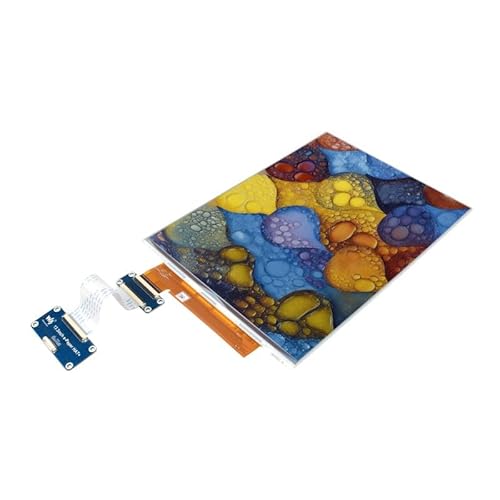
TUOPUONE 13.3-inch E Ink Monitor
Best for: Raspberry Pi e-ink projects
- Screen Size
- 13.3inch
- Resolution
- 1600×1200
- Panel Type
- E-Ink
- Dimensions
- 0.08 × 11.2 × 8.22 inches
This TUOPUONE monitor uses E Ink Spectra 6 technology to deliver full color images at a 1600×1200 pixel resolution. It features a 13.3-inch screen with a 40-pin GPIO header for Raspberry Pi integration. The display holds images without power and consumes energy only during refreshes. It suits developers who need a low-power, high-contrast screen for static content projects.
- E Ink Spectra 6 technology for high contrast and color saturation
- 1600×1200 pixel resolution for clear image detail
- Standard Raspberry Pi 40-pin GPIO header for easy integration
- Ultra-low power consumption with no backlight required
- 1600×1200 resolution is lower than the 1920×1080 standard found on many other monitors
- 13.3-inch screen size is smaller than typical desktop monitors
- You are building a project with a Raspberry Pi using the HAT+ standard
- You need a display that retains images without constant power
- You require a small, portable screen for e-ink applications
- You need a high-refresh-rate screen for gaming or video
- You require a large desktop display over 15 inches
- You want a monitor with a built-in backlight for bright environments
Verdict: TUOPUONE 13.3-inch E Ink Monitor is ideal for makers using Raspberry Pi who need a low-power, color e-paper display for static interfaces.

TUOPUONE 13.3-inch Color E-Paper Display
Best for: Low-power color e-paper embedded projects
- Screen Size
- 13.3inch
- Resolution
- 1600×1200
- Panel Type
- E-Ink
- Dimensions
- 0.08 × 11.2 × 8.22 inches
This TUOPUONE monitor uses E Ink Spectra 6 technology to show full color at 1600×1200 resolution. It has no backlight, which means it uses very little power and keeps the image even when turned off. The 13.3-inch screen is thin and lightweight. You will get development resources for Raspberry Pi or ESP32. This display suits projects where low power and static images matter more than video.
- E Ink Spectra 6 technology for high contrast and color saturation
- 1600×1200 pixel resolution
- Ultra-low power consumption with no backlight
- Includes online development resources and manuals
- 1600×1200 resolution is lower than the 1600-pixel width of the other list item
- Requires SPI communication which limits connection options
- Screen refreshes only when power is needed
- You need a display that uses minimal power
- You are building a project with Raspberry Pi or ESP32
- You want a color e-paper screen for static content
- You need high refresh rates for video
- You require a standard HDMI or USB-C monitor
- You need a larger screen size
Verdict: TUOPUONE 13.3-inch Color E-Paper Display fits developers who need a low-power color screen for static data. It is a practical tool for embedded projects using SPI.
Specifications side by side

| Spec | TUOPUONE 13.3-inch E Ink Monitor | TUOPUONE 13.3-inch Color E-Paper Display |
|---|---|---|
| Screen Size | 13.3inch | 13.3inch |
| Resolution | 1600×1200 | 1600×1200 |
| Panel Type | E-Ink | E-Ink |
| Dimensions | 0.08 × 11.2 × 8.22 inches | 0.08 × 11.2 × 8.22 inches |
| Model | 13.3inch e-Paper HAT+ (E) | 13.3inch e-Paper (E) |
Who should choose TUOPUONE

TUOPUONE serves a narrow niche. You get two small, flat panels. Both measure 11.2 by 8.22 inches. The thickness is a constant 0.08 inches. These are not standard monitors. They are e-ink displays for static images. The top pick suits Raspberry Pi makers. The second option fits developers using SPI. You will not find large screens here. There are no high refresh rates. No gaming monitors exist in this range. This brand is for low-power embedded projects. It is not for general desktop use. Stick to static interfaces if you buy here.
Choosing the Right TUOPUONE Monitor

Match Your Power Needs
E-ink panels consume power only when refreshing. This makes them ideal for battery-powered projects. If you run a Raspberry Pi on batteries, check the power draw of each model. The TUOPUONE 13.3-inch E Ink Monitor is built for makers who need low power for static interfaces. The Color E-Paper Display also supports low-power embedded projects. Both options save energy compared to LCDs. You should verify the current consumption in the datasheet. Lower draw extends battery life significantly. Choose the model that best fits your energy constraints for long-term deployment.
Select Color or Monochrome
Your project determines whether you need color. The TUOPUONE 13.3-inch E Ink Monitor supports color e-paper. This is useful for interfaces requiring visual distinction. The 13.3-inch Color E-Paper Display also offers color capabilities. If you only need black and white, the monochrome option may be simpler. Color e-ink often refreshes slower than grayscale. Consider if your data requires color coding. Static images look sharp on both. You should pick based on visual clarity needs. Color adds complexity but enhances readability for certain dashboards.
Check Interface Compatibility
These displays connect via specific digital interfaces. The Color E-Paper Display explicitly uses SPI. SPI is common for microcontrollers like Raspberry Pi. You must ensure your host device supports SPI. The HAT+ version may have additional connector requirements. Check the pinout diagram before buying. Mismatched interfaces prevent the screen from working. You should verify voltage levels as well. E-ink panels often run on 3.3V logic. Ensure your GPIO pins match these levels. Compatibility is critical for embedded integration. Review the technical manual for pin definitions.
Consider Refresh Speed
E-ink screens do not refresh quickly. They are designed for static content. Moving images will ghost or smear. If you need video, this is not the right choice. Both TUOPUONE models handle static data well. The refresh rate depends on the panel type. Full refreshes take several seconds. Partial refreshes are faster but may leave artifacts. You should plan your interface around this delay. Do not expect smooth scrolling. Use these for dashboards or status displays. Static text and charts work perfectly. Patience is required for updates.
Verify Physical Dimensions
Both models share identical physical sizes. The panel area is 11.2 by 8.22 inches. The total thickness is 0.08 inches. This slim profile fits into tight enclosures. You should measure your project case carefully. The flat design allows for easy mounting. Both options offer the same footprint. This consistency simplifies mechanical design. You can swap models without changing the chassis. Check the bezel size if visible space matters. The uniform dimensions make them interchangeable for many builds. Ensure your mounting holes align with the frame.
Frequently asked questions
Which TUOPUONE monitor is best for Raspberry Pi projects?
The TUOPUONE 13.3-inch E Ink Monitor is the top choice for makers using Raspberry Pi. It provides a low-power, color e-paper display suitable for static interfaces. This model is designed specifically for embedded projects where power efficiency and clear static visuals are priorities.
Do TUOPUONE monitors support color displays?
Yes, both available models support color. The top pick, the TUOPUONE 13.3-inch E Ink Monitor, offers color e-paper capabilities. The second option, the TUOPUONE 13.3-inch Color E-Paper Display, also features color output. Both are ideal for projects requiring visual data representation beyond black and white.
What are the physical dimensions of these e-ink screens?
Both monitors share identical physical dimensions. The panel width is 11.2 inches, and the height is 8.22 inches. The total length or thickness is a slim 0.08 inches. This consistent footprint allows for easy integration into various embedded cases or mounting setups.
Are these monitors suitable for battery-powered devices?
Yes, they are excellent for battery-powered applications. E-ink technology consumes power primarily when refreshing the image. This low-power characteristic makes the TUOPUONE monitors ideal for Raspberry Pi projects or other embedded systems running on batteries, extending operational time significantly compared to standard LCDs.
What interface do these displays use for connection?
The TUOPUONE 13.3-inch Color E-Paper Display utilizes an SPI interface for connectivity. This makes it a practical tool for developers working on embedded projects. The interface allows for straightforward integration with microcontrollers like the Raspberry Pi, enabling efficient data transfer for static display updates.
Can I use these screens for static data visualization?
Absolutely. Both models are optimized for static interfaces. The top pick is ideal for static data, while the second option is a practical tool for embedded projects. Since e-ink panels hold their image without power, they are perfect for displaying constant information without refreshing overhead.
See also