The Decisive Olympus Mirrorless Camera Buying Guide
As Amazon Associates, we earn from qualifying purchases. This means we may receive a small commission at no extra cost to you if you click through and make a purchase.
Choosing the right olympus mirrorless camera requires balancing extreme portability against rugged operational durability. The Micro Four Thirds standard continues to offer busy professionals a distinctive advantage: high-grade imaging sensors and class-leading five-axis stabilization packed into camera bodies that fit easily into carry-on luggage or daily commuter satchels. While competing platforms like a lumix mirrorless camera also utilize this compact sensor mount, Olympus and OM SYSTEM bodies emphasize computational capture and field ergonomics that streamline production workflows for outdoor shooters, travel vloggers, and commercial documentary artists alike.
This comparative guide evaluates four distinct Olympus mirrorless configurations: the ultra-portable E-M10 Mark IV travel kit, the flagship weather-sealed OM-1 Mark II body, the comprehensive OM-1 Mark II PRO lens kit, and the classic OM-D E-M1 professional workhorse. These four selections differ markedly in their sensor architectures, autofocus tracking speeds, physical sealing grades, and computational processing capabilities. Reviewing these key differences will help you determine the best olympus mirrorless camera for your specific visual assignments, budget parameters, and fieldwork conditions.
Which Olympus Mirrorless Camera Should You Buy
- Everyday creators, travel vloggers, and street photographers seeking an ultralight kit with a tilting selfie monitor: OM SYSTEM Olympus E-M10 Mark IV.
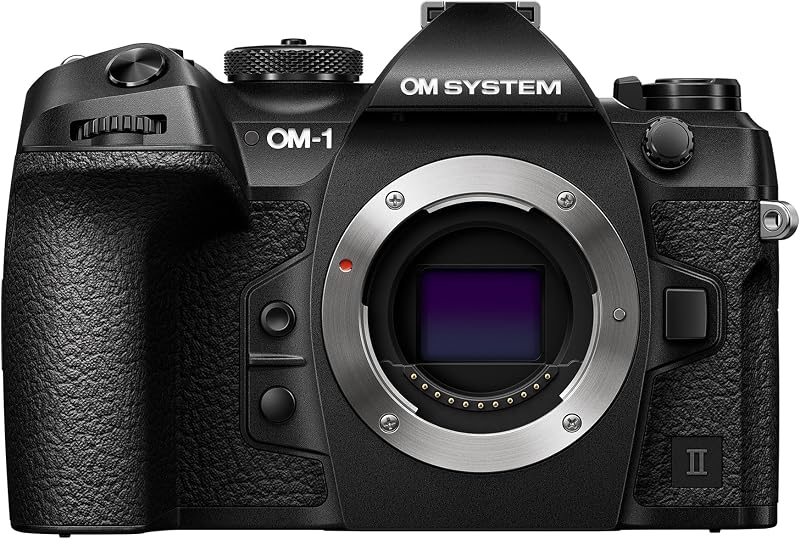
- Wildlife, sports, and extreme outdoor specialists who own Micro Four Thirds glass and need an IP53-certified flagship chassis: OM SYSTEM Olympus OM-1 Mark II (Body Only).
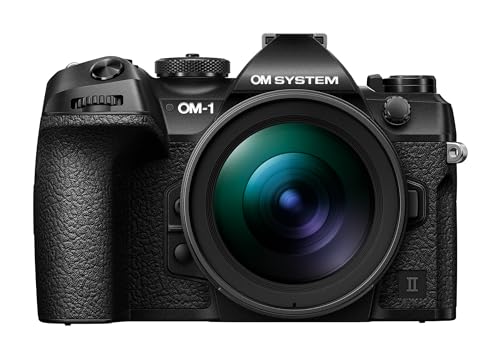
- Commercial professionals and expedition leaders requiring a complete, turn-key, weather-resistant system with constant f/2.8 optics: OM SYSTEM Olympus OM-1 Mark II (12-40mm F2.8 PRO II Kit).
- Studio photographers, legacy glass collectors, and budget-conscious professionals who prioritize robust physical dials and dual autofocus arrays: Olympus OM-D E-M1 Mirrorless Digital Camera.
OM SYSTEM Olympus E-M10 Mark IV

OM System
4.9 average from Amazon buyers
- Color
- Silver
- Dimensions
- 4.8 x 2.6 x 3.3 inches
- Weight
- 1.1 Pounds
Listed by the seller on the product page.
Best for: All-weather commercial and documentary pros
Pros
- Constant f/2.8 PRO II zoom lens
- Complete IP53 system sealing
- TruePic X computational speed
- 1053 all cross-type AF points
Cons
- Larger total kit weight
- Complex operational depth
Best for: Wildlife and extreme expedition photographers
Pros
- Certified IP53 weatherproofing
- 1053-point Cross Quad Pixel AF
- Stacked BSI Live MOS sensor
- In-camera Live GND and ND
Cons
- Requires separate lens purchase
- Advanced menu learning curve

Best for: Casual creators and lightweight travel vloggers
Pros
- 20 MP Live MOS sensor
- 5-axis image stabilization
- Flip-down selfie touchscreen
- Compact pancake zoom included
Cons
- Unsealed body construction
- Contrast-only autofocus
The OM SYSTEM Olympus E-M10 Mark IV is tailored for mobile professionals and content creators who require uncompromising image quality without the physical footprint of larger systems. Encased in an elegant silver finish, the body houses a 20 MP Live MOS sensor supported by built-in 5-axis sensor-shift image stabilization capable of up to 4.5 shutter speed steps of compensation. Bundled with the M.Zuiko Digital ED 14-42mm F3.5-5.6 EZ pancake lens, this kit provides a versatile 3.0x optical zoom range that retracts flush, allowing creators to slip a responsive, fully featured photography tool into an everyday coat pocket.
Visual workflow on this olympus micro four thirds camera focuses on streamlined output and creative flexibility. The camera features a 3-inch tilting touchscreen LCD that flips downward to trigger a dedicated selfie mode automatically, simplifying video blogging, framing personal dispatches, and recording high-angle or low-angle perspectives. With 16 Art Filters spanning 31 variations, including an Instant Film simulation, creators can apply stylistic color profiles in-camera to produce finalized JPEG files instantly. For mobile post-production, always-on Bluetooth and Wi-Fi connectivity seamlessly interface with the OI Share smartphone application, pushing full-resolution photographs and 4K video clips to handheld devices for swift client proofing.
Operational control spans automatic capture modes to comprehensive manual exposure, with shutter speeds stretching from 60 seconds up to an ultra-fast 1/16000 second using an electronic shutter. While full-frame alternatives such as a sony full frame body deliver larger light-gathering surfaces, the E-M10 Mark IV prioritizes sheer agility and frictionless daily carry. However, this model lacks the ruggedized weather sealing and high-density cross-type tracking autofocus of OM SYSTEM professional flagships. When facing torrential rain, freezing temperatures, or high-velocity sports tracking, the E-M10 Mark IV steps aside in favor of the OM-1 Mark II series.
- 20 MP Live MOS sensor paired with 5-axis sensor-shift image stabilization delivering 4.5 steps of compensation.
- Flip-down 3-inch tilting touchscreen monitor featuring automated selfie mode activation.
- Always-on Bluetooth and Wi-Fi background connectivity integrated with the OI Share smartphone app.
- Bundled M.Zuiko Digital ED 14-42mm F3.5-5.6 EZ retractable zoom lens offering 3.0x optical zoom.
OM SYSTEM Olympus OM-1 Mark II

OM System
4.4 average from Amazon buyers
- Color
- Black
- Dimensions
- 7.6 x 7.2 x 5.63 Inches
- Weight
- 1.1 Pounds
Listed by the seller on the product page.
The OM SYSTEM Olympus OM-1 Mark II serves as the standard-bearer for professional Micro Four Thirds performance. Designed from the inside out to conquer demanding natural environments, this body integrates a 20.4 MP stacked BSI Live MOS sensor driven by the TruePic X image processing engine. This computational architecture delivers processing speeds up to three times faster than older Olympus flagship iterations, resulting in near-instantaneous autofocus acquisition, reduced digital noise at elevated sensitivities, and an expanded base sensitivity starting down at ISO 80.
Focus performance represents a massive leap forward through the implementation of Cross Quad Pixel autofocus technology. Featuring 1,053 all cross-type focus points that span 100 percent of the frame, the camera locks onto rapidly moving wildlife, birds in flight, and erratic field action with unwavering precision. Wildlife filmmakers and field photographers working in punishing weather conditions benefit from certified IP53 environmental protection. This weather sealed olympus camera is fully dustproof, splashproof, and freezeproof down to -10 degrees Celsius, ensuring absolute operational reliability through arctic blizzards and equatorial downpours.
Computational imaging is where this om system mirrorless camera replaces an entire bag of physical filtration gear. The internal operating system includes Handheld High Res Shot, Live GND (Graduated Neutral Density), Live ND, Handheld Live Composite, Focus Stacking, and HDR shooting directly within the camera menu. By eliminating the necessity of mounting glass square filters on location, users can execute dramatic long exposures and balance high-contrast landscapes in seconds. As a standalone body, this offering suits established photographers who already possess high-end M.Zuiko PRO glass and want to modernize their sensor pipeline without purchasing redundant optics.
- Cross Quad Pixel AF system with 1,053 all cross-type focus points providing 100 percent frame coverage.
- 20.4 MP stacked BSI Live MOS sensor accelerated by the TruePic X computational processing engine.
- Certified IP53 weather sealing providing dustproof, splashproof, and freezeproof performance to -10 degrees Celsius.
- Integrated computational imaging functions including Live GND, Live ND, Handheld High Res Shot, and Focus Stacking.
OM SYSTEM Olympus OM-1 Mark II
OM System
4.8 average from Amazon buyers
- Color
- Black
- Dimensions
- 11.3 x 7.6 x 5.04 inches
- Weight
- 1 pounds
Listed by the seller on the product page.
For commercial visual creators requiring a complete, expedition-ready package straight out of the box, this configuration of the OM SYSTEM Olympus OM-1 Mark II arrives bundled with the acclaimed M.Zuiko Digital ED 12-40mm F2.8 PRO II lens. Providing a versatile 24-80mm full-frame focal equivalent, this lens features a constant f/2.8 maximum aperture that maintains uniform light gathering and shallow depth-of-field control throughout the zoom range. Unlike assembling third-party components or selecting an alternative brand bundle like a sony mirrorless camera bundle, this factory combination guarantees uninterrupted IP53 weather resistance across both the body and the optical barrel.
The imaging core retains the full power of the OM-1 Mark II platform, pairing the 20.4 MP stacked BSI Live MOS sensor with the TruePic X engine. The included 12-40mm PRO II lens is specifically engineered to resolve the ultra-high-frequency detail generated by the camera Handheld High Res Shot mode, which combines multiple micro-shifted exposures into a single ultra-detailed image. Fast-aperture optics combined with 1,053 all cross-type focus points ensure swift subject acquisition in dimly lit event venues, dense jungle canopies, or coastal dawn conditions.
Creative professionals who handle commercial assignments, documentary journalism, and landscape photography will find this kit ready for immediate deployment without supplementary accessory purchases. The camera offers shutter speed capabilities reaching 0.00003125 seconds (1/32000 second) via the high-speed electronic shutter, allowing wide-open f/2.8 shooting under intense midday sun without overexposure. While this complete professional kit represents a heavier investment and larger physical mass than the E-M10 Mark IV travel bundle, its rugged construction and premium optical resolution make it the ultimate production package in the OM SYSTEM lineup.
- Bundled M.Zuiko Digital ED 12-40mm F2.8 PRO II lens delivering a constant f/2.8 maximum aperture.
- Complete IP53-rated weather sealing across camera chassis and lens barrel down to -10 degrees Celsius.
- Cross Quad Pixel AF with 1,053 all cross-type points driven by the high-speed TruePic X processor.
- Direct computational photography modes including Handheld High Res Shot, Focus Stacking, and Live ND.
Olympus OM-D E-M1 Mirrorless Digital Camera

OM System
4.0 average from Amazon buyers
- Color
- Black
- Dimensions
- 5.13 x 2.48 x 3.68 inches
Listed by the seller on the product page.
Best for: Studio shooters and tactile ergonomics enthusiasts
Pros
- Tactile dual-dial controls
- Dual contrast and phase AF
- 36M-dot electronic viewfinder
- 10 fps burst shooting
Cons
- Older 16.3 MP sensor
- Limited to 1080p HD video
The Olympus OM-D E-M1 Mirrorless Digital Camera represents a landmark design in professional Micro Four Thirds history, continuing to serve as a reliable platform for studio operations, secondary camera needs, and manual-focus vintage lens adaptation. Constructed around a 16.3 MP Live MOS Four Thirds sensor, this camera pairs physical durability with Olympus signature 5-axis sensor-shift image stabilization. Its mechanical architecture features dedicated external command dials, an ergonomic deep grip, and extensive assignable buttons that give photographers immediate tactile feedback without requiring menu navigation.
Autofocus performance is powered by Dual FAST AF, an array incorporating both contrast detection and 37 on-chip phase detection points. This hybrid design allows burst shooting rates up to 10 frames per second, handling fast action, street candids, and sports tracking with solid precision. The electronic viewfinder delivers a 2,360,000-dot resolution with an immersive 1.3x magnification factor, providing a wide, real-time exposure preview that matches or exceeds optical viewfinders found in traditional DSLR bodies like legacy cameras for photography nikon. Complementing the viewfinder is a 3-inch tiltable touchscreen display with 1,037,000 dots, enabling agile high-angle and low-angle framing.
While the E-M1 paved the path for every subsequent olympus professional camera, its internal processing gives ground to newer models in several key areas. Video recording tops out at 1080p full HD at 30 frames per second, and the listing does not specify advanced in-camera neutral density filters or Handheld High Res modes. The 16.3 MP sensor also yields less cropping latitude compared to the 20.4 MP stacked sensors in the OM-1 Mark II series. Nevertheless, for studio photographers working under controlled strobe illumination, backup event shooters, or creators wanting pro-grade physical ergonomics at a measured footprint, the original E-M1 remains a profoundly competent tool.
- 16.3 MP Four Thirds CMOS sensor backed by 5-axis sensor-shift image stabilization.
- Dual FAST AF system combining contrast and phase detection with 10 frames per second burst shooting.
- High-magnification 2,360,000-dot electronic viewfinder with 1.3x magnification and tiltable touchscreen LCD.
- Rugged magnesium-alloy chassis equipped with comprehensive dual-dial physical controls.
What Sets These Models Apart
Conducting an olympus mirrorless camera comparison requires examining how internal sensor technology, computational features, and environmental weather sealing diverge across generations. While every body in this roundup incorporates sensor-shift image stabilization and the versatile Micro Four Thirds lens mount, their field capabilities address vastly different professional requirements. The table below outlines key technical specifications drawn directly from the manufacturer product data.
| Camera Model | Sensor Resolution & Architecture | Environmental Sealing | Autofocus Specification | Maximum Shutter Speed |
|---|---|---|---|---|
| OM SYSTEM Olympus E-M10 Mark IV | 20 MP Live MOS (CMOS) | Unsealed (Standard construction) | Contrast Detect AF with Art Filters | 1/16000 sec |
| OM SYSTEM Olympus OM-1 Mark II (Body Only) | 20.4 MP Stacked BSI Live MOS | IP53 Certified (Freezeproof to -10℃) | Cross Quad Pixel AF (1,053 cross-type points) | 1/32000 sec |
| OM SYSTEM Olympus OM-1 Mark II (12-40mm Kit) | 20.4 MP Stacked BSI Live MOS | IP53 Certified (Freezeproof to -10℃) | Cross Quad Pixel AF (1,053 cross-type points) | 0.00003125 sec (1/32000 sec) |
| Olympus OM-D E-M1 Mirrorless Digital Camera | 16.3 MP Four Thirds CMOS | Unsealed (Listing does not specify IP rating) | Dual FAST AF (Contrast & Phase Detect) | 1/8000 sec |
The primary architectural divergence lies between the standard Live MOS sensors found on the E-M10 Mark IV and E-M1, and the cutting-edge Stacked BSI Live MOS sensor inside the OM-1 Mark II variants. The stacked configuration dramatically increases readout speeds, unlocking continuous blackout-free tracking, 1/32000 second shutter performance, and complex on-the-fly computational processing like Live GND and Handheld High Res capture. Meanwhile, autofocus advances from basic contrast arrays and 37-point hybrid arrays up to 1,053 full cross-type focus points spanning every quadrant of the composition.
Buying Tips for Olympus Mirrorless Cameras
When determining which olympus mirrorless camera to buy, start by evaluating your primary shooting climate and physical operating environment. If your photography takes you into mountain rainstorms, freezing woodlands, dusty deserts, or sea-spray coastlines, investing in an IP53-rated camera like the OM-1 Mark II is essential. Unsealed cameras like the E-M10 Mark IV excel in urban, studio, and casual travel settings, but exposing them to harsh atmospheric moisture risks internal component damage. Always align the camera sealing standard with the conditions where you earn your living.
Next, consider whether in-camera computational photography will improve your shooting efficiency. The TruePic X engine on the OM-1 Mark II incorporates virtual neutral density and graduated neutral density filters directly into the camera software. For landscape photographers and documentary shooters, this capability eliminates the need to carry glass filter kits, step-up rings, and specialized filter holder frames into the backcountry. If your workflow relies heavily on tripod-based long exposures or high-contrast sunrise compositions, these computational features save substantial field time and pack weight.
Finally, evaluate your lens inventory and system integration needs. The Micro Four Thirds standard benefits from an expansive catalog of interchangeable lenses, but system synergy matters. Pairing an unsealed body with a heavy professional telephoto lens results in an unbalanced grip and compromises all-weather resistance. If you are building a new setup from scratch, purchasing the OM-1 Mark II with the M.Zuiko 12-40mm F2.8 PRO II lens kit ensures matched optical performance, immediate f/2.8 brightness across key working focal lengths, and unified IP53 weather resistance right from day one.
FAQ
What makes an Olympus Micro Four Thirds camera advantageous for professional travel?
An Olympus Micro Four Thirds camera pairs a compact sensor format with an ultra-short flange distance, allowing optical designers to build professional-grade f/2.8 lenses that weigh a fraction of equivalent full-frame glass. In addition, the highly refined in-body 5-axis image stabilization allows photographers to capture razor-sharp handheld exposures at slow shutter speeds, eliminating the need to pack a heavy tripod on fast-moving travel or documentary assignments.
How does the IP53 rating on the OM-1 Mark II protect the camera in the field?
An IP53 ingress protection rating indicates certified defense against dust penetration and spraying water, alongside verified operation in sub-zero freezing conditions down to -10 degrees Celsius. In practical field terms, this allows photographers to continue capturing wildlife, sports, or documentary subjects in heavy rain, blowing desert sand, and arctic conditions without requiring protective plastic rain sleeves.
Can the OM SYSTEM Olympus E-M10 Mark IV handle professional video production?
The E-M10 Mark IV supports high-resolution 4K video recording, 5-axis sensor-shift stabilization for steady handheld footage, and a downward-tilting monitor optimized for direct presenting. While it provides an exceptional, agile solution for social media content creation, lifestyle documentation, and corporate dispatches, high-end commercial cinema productions requiring advanced external audio monitoring and multi-camera phase-detect tracking will find more expansive options on the OM-1 Mark II.
What is the difference between the OM-1 Mark II standalone body and the lens kit?
Both offerings feature the exact same flagship camera body equipped with the 20.4 MP stacked BSI Live MOS sensor, TruePic X processor, 1,053 cross-type focus points, and IP53 weather sealing. The standalone body is designed for photographers who already own M.Zuiko lenses, whereas the kit includes the premium M.Zuiko Digital ED 12-40mm F2.8 PRO II lens, delivering an immediate, turn-key professional zoom package with matching weather resistance.
How does Olympus 5-axis image stabilization improve handheld photography?
Olympus in-body image stabilization utilizes a high-precision sensor-shift mechanism that actively compensates for yaw, pitch, roll, and vertical and horizontal translational shifts. By compensating for hand movement by up to 4.5 shutter speed steps on the E-M10 Mark IV, photographers can shoot handheld in low ambient light at slow shutter speeds without introducing motion blur, preserving crisp detail without immediately spiking sensor ISO sensitivity.